What if you could land a stable, well-paying job in Italy — even with zero prior experience? That’s not wishful thinking. Food packing jobs in Italy in 2026 are among the most accessible employment opportunities available to both local and international workers, and right now, Italian food companies are actively hiring.
Italy’s food industry is one of the largest and most celebrated in the world. From pasta producers in Emilia-Romagna to olive oil bottlers in Puglia and confectionery giants in Piedmont, the country’s food production sector employs hundreds of thousands of workers — and food packaging is the engine that keeps it all running. The best part? Most of these roles require no previous experience, offer on-the-job training, and provide a genuine path into stable employment in Europe.
In this guide, we’ll cover everything — what the job involves, how much you’ll earn, which companies are hiring, how to get your work visa, and how to apply. Let’s get started.
Why Food Packing Jobs in Italy Are a Smart Choice in 2026
Italy is the world’s largest exporter of pasta and a top-five global exporter of wine, olive oil, and cheese. This food production powerhouse relies on a massive workforce to package, label, and prepare products for both domestic shelves and international markets.
In 2026, the sector faces a genuine labor shortage — particularly in Northern and Central Italy — meaning employers are actively seeking workers and are increasingly open to hiring foreigners through Italy’s official immigration quota system, the Decreto Flussi. This is your window of opportunity.
Food packaging roles are also considered unskilled or low-skilled work, which means they fall within the categories most easily sponsored under Italian work permits. Even if you’ve never set foot in a factory, you can qualify — and be earning a steady income in Italy within months.
What Do Food Packing Jobs in Italy Involve?
Before you apply, it helps to know exactly what you’ll be doing day to day. Food packing jobs vary by employer and product type, but common responsibilities include:
- Placing products into boxes, bags, trays, or containers according to set specifications
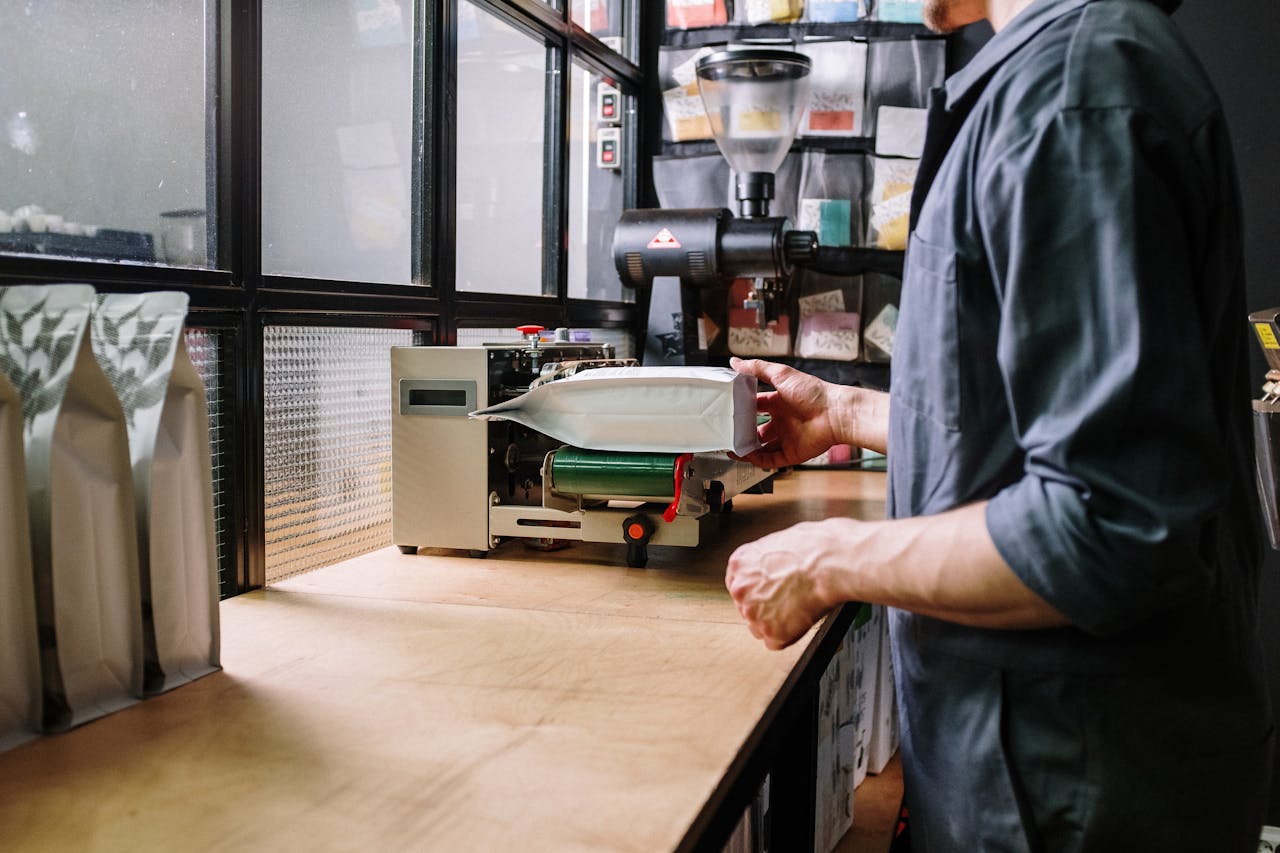
- Operating and monitoring automated packaging machinery
- Labeling products with barcodes, batch numbers, and expiry dates
- Performing quality checks to ensure packaging meets hygiene and safety standards
- Weighing and measuring portions for accurate filling
- Keeping the workspace clean and following food safety protocols (HACCP)
- Palletizing and preparing finished goods for dispatch
Shifts are typically 8 hours, and many facilities run day, afternoon, and night shifts — with overtime available and often well-compensated.
Food Packing Salary in Italy 2026
Let’s talk money. Here’s a realistic salary breakdown for food packing roles:
- Entry-level packaging operator: €1,050 – €1,300 per month
- Experienced packaging machine operator: €1,400 – €1,800 per month
- Quality control / line supervisor: €1,800 – €2,300 per month
In addition to base pay, most contracts include:
- Meal vouchers (buoni pasto) — typically €7–€10 per working day
- Overtime pay at enhanced rates (25–50% above standard hourly rate)
- End-of-year bonus (tredicesima) — equivalent to one extra month’s salary
- Paid annual leave — minimum 4 weeks per year under Italian law
- Social security and health coverage — fully included in standard employment contracts
When you add it all up, a food packing job in Italy offers a genuinely livable income, especially if you’re coming from a country with a lower cost of living.
Top Companies Offering Food Packing Jobs in Italy
Some of Italy’s biggest food brands are among the top employers in this space:
- Barilla – Pasta, sauces, and bakery products (Parma, Pedrignano)
- Ferrero – Chocolate and confectionery packing (Alba, Cuneo)
- Granarolo – Dairy product packaging (Bologna)
- Mutti – Tomato product packaging (Parma)
- Amadori – Poultry and meat packaging (Forlì-Cesena)
- Lavazza – Coffee packaging operations (Turin)
- Cirio / De Rica – Canned and packaged food products
- Conserve Italia – Fruit and vegetable packaging cooperative
Beyond these major brands, hundreds of small and medium food producers across Italy hire packaging workers through staffing agencies. These SMEs often offer faster hiring processes and are more flexible with international applicants.
Real Story: From Senegal to Parma
Fatou, a 27-year-old from Dakar, had no factory experience when she began her Italian job search. She connected with an Italian recruitment agency through a Facebook group for African workers in Europe, submitted her CV with help from a local NGO, and within six weeks had a sponsoring employer in Parma — home to Prosciutto di Parma and some of Italy’s most celebrated food producers. She’s now two years into her contract at a pasta packaging facility. “I didn’t know anything about machines when I started,” she says, “but after two weeks of training I was confident. The money is good, my permit is valid, and I’m saving up. I feel like I actually have a future now.” Stories like Fatou’s are becoming more and more common — and yours could be next.
Work Permit Requirements for Food Packing Jobs in Italy
EU Citizens
EU/EEA passport holders can work in Italy freely. No work permit is needed. Simply register at the local Comune (town hall) within 90 days of arrival and you’re legally covered to work.
Non-EU Citizens: The Step-by-Step Process
Step 1 – Watch for the Decreto Flussi Announcement Italy’s annual immigration quota — the Decreto Flussi — sets limits on how many non-EU workers can enter Italy for unskilled and semi-skilled work, including food production and packaging. Monitor the official site at interno.gov.it and news from your country’s Italian consulate. Quotas typically open in the first quarter of the year.
Step 2 – Secure a Job Offer / Sponsoring Employer You must have an Italian employer willing to sponsor your work authorization. Italian food companies frequently use licensed Agenzie per il Lavoro (staffing agencies) to recruit foreign workers. Connect with agencies like Adecco Italia, Randstad Italia, Gi Group, Manpower Italia, or Etjca — all of which regularly place workers in food industry roles.
Step 3 – Employer Files for Nulla Osta Your sponsoring employer submits a work authorization request (Nulla Osta) at the Sportello Unico per l’Immigrazione in the relevant Italian province. Processing times vary but typically take 4–8 weeks.
Step 4 – Apply for Your Work Visa Once the Nulla Osta is approved, apply for a Visto per Lavoro Subordinato (Subordinate Work Visa) at the Italian consulate or embassy in your home country. Bring your job offer letter, Nulla Osta, passport, and supporting documents.
Step 5 – Arrive and Register Within 8 days of arriving in Italy, submit your application for a Permesso di Soggiorno (residence permit) at a local post office. This officially legalizes your stay and employment status in Italy.
The full process typically takes 2–5 months from start to finish. Beginning early — especially before Decreto Flussi quotas open — gives you the best chance of securing a slot.
How to Find Food Packing Jobs in Italy
Here are the best ways to search and apply:
- Indeed Italia (indeed.it) — search “addetto confezionamento”, “operaio alimentare”, or “food packaging Italy”
- Infojobs.it — popular Italian job board with many food industry listings
- LinkedIn Italy — useful for supervisory and technical roles
- Staffing agency websites — Adecco, Manpower, Gi Group, Randstad all post food packing vacancies regularly
- Company career pages — check Barilla, Ferrero, Amadori, and Granarolo directly
- Facebook groups — communities like “Lavoro in Italia per Stranieri” often share verified job leads and agency contacts
When applying, make sure your CV includes any relevant skills — even indirect ones. Experience in cleaning, catering, agriculture, or any kind of physical labor shows you’re reliable and work-ready.
Tips to Improve Your Chances of Getting Hired
- Learn basic Italian — even a short free course on Duolingo helps enormously in interviews and on the job floor
- Get a food hygiene certificate — a basic HACCP food safety certificate (available online) makes you stand out immediately
- Apply through multiple agencies simultaneously — don’t rely on one channel
- Be flexible with location — smaller cities like Parma, Modena, Bologna, and Brescia have strong food industries and less competition than Milan or Rome
- Highlight reliability — employers in food packing value consistency and punctuality above everything else. Emphasize these in your CV and interview
FAQs – Food Packing Jobs in Italy 2026
Q: Do I need experience to get a food packing job in Italy? A: No. Most entry-level food packing roles require no prior experience. Employers provide full on-the-job training. A positive attitude and willingness to follow instructions are your most important assets.
Q: What is the minimum wage for food packing workers in Italy? A: Italy does not have a universal minimum wage, but collective labor agreements (contratti collettivi) set sector-specific minimums. For food industry workers, the minimum is typically around €7.50–€8.50 per hour, translating to roughly €1,050–€1,200 per month for full-time work.
Q: Can I bring my family to Italy on a food packing work visa? A: Yes, once you’ve established legal residency and your income meets the threshold set by Italian immigration law, you can apply for family reunification (ricongiungimento familiare) to bring your spouse and dependent children.
Q: How competitive is the Decreto Flussi quota system? A: Very. Quota slots are limited and applications can be submitted only during specific windows. Many slots fill within days of opening. Working with a licensed Italian recruitment agency greatly improves your chances of securing a place.
Q: Is it possible to get permanent residency through a food packing job? A: Yes. After five consecutive years of legal residence and employment in Italy, you can apply for the EU long-term residence permit, which provides near-permanent status and allows you to live and work across the EU.
Conclusion – No Experience, No Problem. Italy Is Ready for You.
We know how overwhelming it can feel — searching for a better life while dealing with uncertainty, distance, and a system that can seem impossibly complex. But here’s what we want you to hear: you don’t need a degree, a big CV, or years of experience to build something real in Italy. You just need the right information and the courage to take action.
Food packing jobs in Italy in 2026 are one of the most realistic, accessible, and rewarding pathways into European employment that exist right now. The companies need you. The system has a path for you. All that’s left is for you to take that first step — update your CV, contact a staffing agency, and start the process today.
Italy isn’t just a place people dream about. For thousands of workers around the world, it’s home. And it could be yours too.